
Understanding the Latest Trends in AI and Hosting
The relationship between artificial intelligence and web hosting has fundamentally changed, and it’s happening faster than most organizations realize. Traditional hosting infrastructure—built for predictable traffic and standard workloads—is being challenged by AI’s computational demands, while AI itself is revolutionizing how we manage servers, allocate resources, and respond to threats. The gap between companies that have adapted their hosting strategy and those still relying on conventional approaches is widening quickly.
This isn’t just about keeping up with technology for its own sake. The practical implications touch everything from operational costs and performance to scalability and competitive positioning. In this analysis, we’ll explore the key trends reshaping this space—GPU-optimized infrastructure, edge AI deployment, vector databases, and intelligent operations management—and what they mean for businesses navigating an increasingly AI-dependent landscape.
“We are changing the world with technology. It’s not just about making things faster or cheaper. It’s about fundamentally changing what’s possible, and in doing so, changing what we expect from the world around us.” — Satya Nadella
Let’s begin with the data, because the trajectory is significant. Organizations increased spending on compute and storage hardware infrastructure for AI deployments by 97% year-over-year in the first half of 2024, reaching $47.4 billion. This near-doubling of expenditure reflects more than increased capacity acquisition—it signals a fundamental architectural transformation in how enterprise infrastructure must be designed and deployed.
The current distribution of deployment strategies reveals critical insights into market direction. AI servers in cloud and shared environments drove 72% of AI server revenues, suggesting cloud dominance at first glance. However, a deeper analysis reveals a more complex picture. Organizations are finding that certain AI workloads generate unpredictable cost structures in public cloud environments, prompting strategic reassessment. This explains the significant enterprise pivot toward hybrid approaches—accelerated servers with GPUs and other specialized processors accounted for 70% of total AI infrastructure spending, representing substantial capital investments. With individual GPU units exceeding $25,000 and per-rack power requirements effectively doubling, each architectural decision carries considerable financial implications.
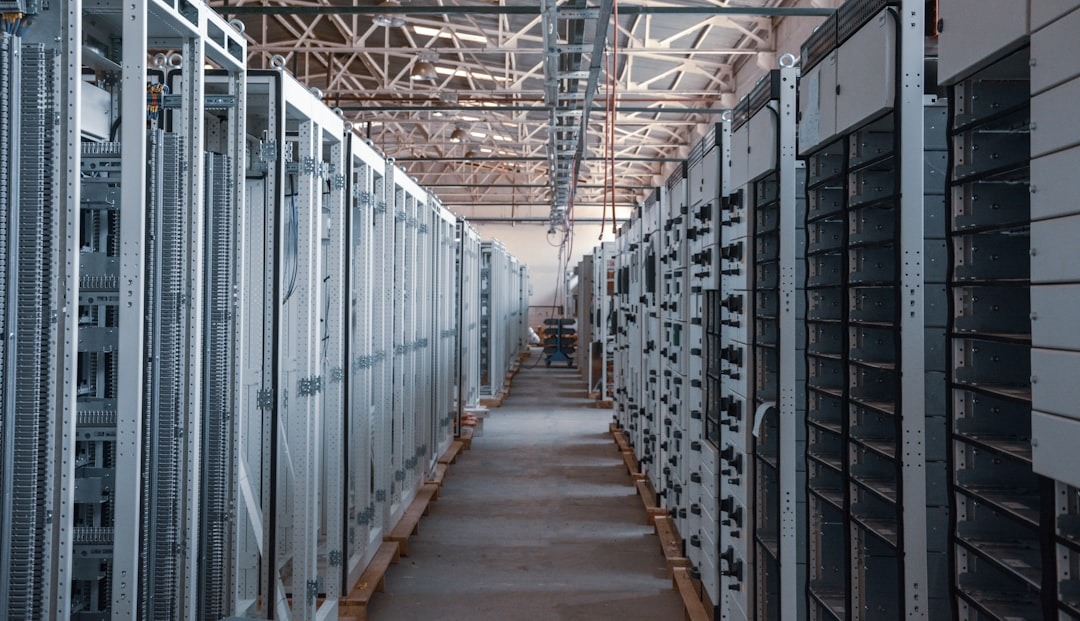
The physical infrastructure constraints present equally significant challenges. Data center operators face urgent modernization requirements driven by technical necessity rather than optional upgrades. Current demand has exposed limitations in traditional data centers designed for 10 kW racks when serving AI clusters requiring up to 120 kW. Moreover, capacity availability has become a critical constraint. Organizations unable to secure infrastructure commitments 18-24 months in advance face genuine risk of insufficient compute resources to support operational requirements.

While infrastructure teams address power and capacity challenges, parallel evolution in the technology stack is fundamentally altering AI application architecture. Two developments warrant particular attention for their transformative impact: the acceleration of edge computing adoption and the emergence of vector databases as mission-critical infrastructure.
Edge computing has transitioned from theoretical advantage to operational imperative. Global spending on edge computing reached $228 billion in 2024, up 14% from 2023, with projections approaching $378 billion by 2028. This growth is driven by concrete economic and technical factors rather than market positioning. Processing data at the point of generation reduces bandwidth costs, improves response latency for end users, and in many jurisdictions, simplifies compliance with data sovereignty requirements. For applications demanding real-time processing—autonomous systems, conversational AI interfaces, or industrial automation—edge deployment frequently represents the only viable architecture for production-scale operations.
The second critical shift involves the rapid maturation of vector database technology. The vector database market surpassed $2.2 billion in 2024 and is projected to expand at approximately 21.9% CAGR, reaching $10.6 billion by 2032. These platforms represent purpose-built systems optimized for similarity search and semantic operations that underpin modern AI applications, rather than adapted traditional databases. The incorporation of native vector support into established enterprise database platforms signals this capability has become a fundamental requirement for contemporary data infrastructure.
Wrapping Up with Key Insights
The transformation we’re witnessing in AI and hosting infrastructure isn’t a temporary adjustment—it’s a fundamental recalibration of enterprise technology architecture. The 97% year-over-year increase in AI infrastructure spending, the $228 billion invested in edge computing, and the rapid maturation of vector databases all converge on a single reality: the infrastructure strategies that served traditional applications are no longer sufficient. Success in this environment requires more than powerful hardware—it demands thoughtful architecture that balances performance, cost, and scalability across increasingly distributed and specialized technology stacks.
The capacity constraints, power requirements, and specialized computing needs we’ve examined represent the new baseline for infrastructure planning, not temporary challenges to overcome. Organizations positioning themselves for long-term success are making informed architectural decisions now, securing capacity commitments well in advance, and building the technical capabilities to manage complexity across hybrid environments. As AI transitions from experimental feature to business-critical capability, the infrastructure decisions you make today will directly determine your operational flexibility and competitive positioning tomorrow. In a market where data center capacity is constrained and architectural missteps carry substantial financial consequences, the difference between proactive and reactive adaptation has never been more significant.
Sources & References
- IDC Worldwide Artificial Intelligence Infrastructure Quarterly Tracker, 2024
- International Data Corporation (IDC) Edge Computing Spending Guide, 2024
- Vector Database Market Analysis Report, 2024-2032
- Industry infrastructure capacity and deployment studies, 2024
Data and statistics cited are current as of publication date. Market conditions and infrastructure capabilities continue to evolve rapidly.